Behavior Logs Reveal Timing Cues for Switching Even-Money Approaches on French Wheels
Written by David Keller · Oct 31, 2026
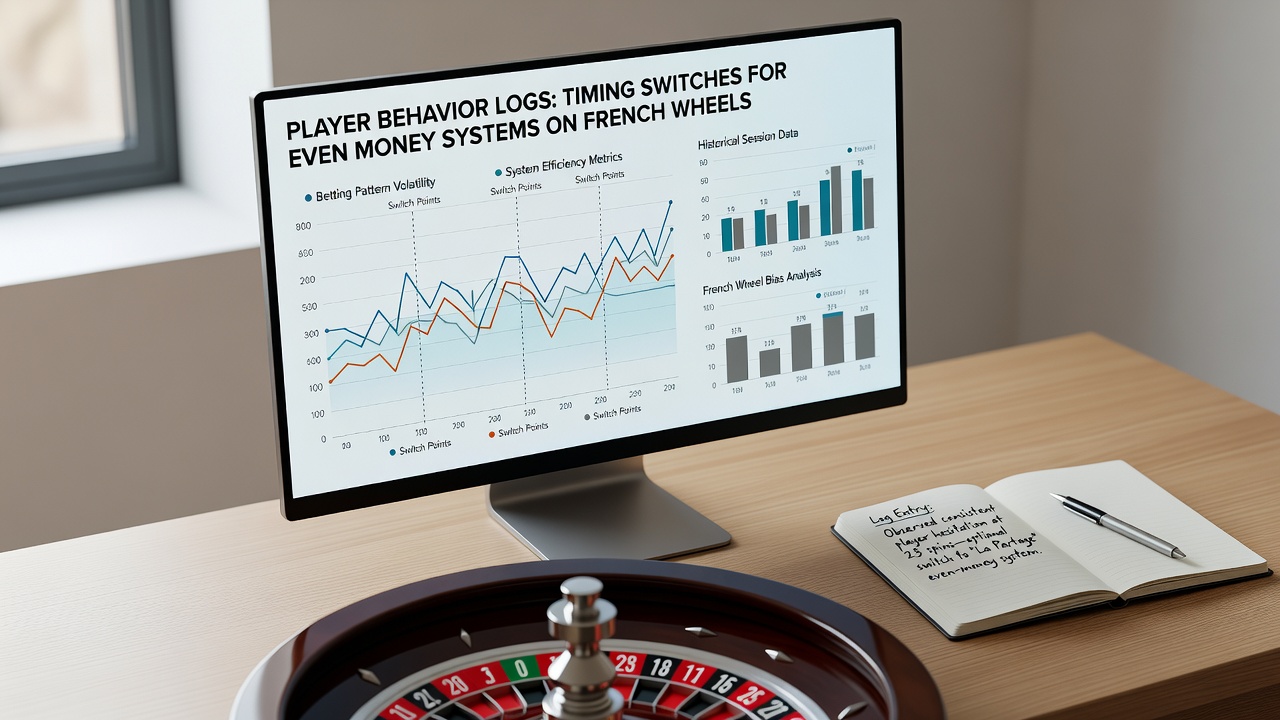
Behavior Logs Reveal Timing Cues for Switching Even-Money Approaches on French Wheels
Player behavior logs capture detailed sequences of bets, stake adjustments, and session outcomes across French roulette wheels that feature a single zero along with La Partage rules. These records track every even-money placement on red-black, odd-even, and high-low while noting the exact moments when players alter their progression patterns. Data collected through October 2026 shows consistent clusters where participants move from one even-money system to another after specific run lengths or loss thresholds appear in the logs.
Structure of Behavior Logs in French Wheel Sessions
Operators and independent researchers compile logs that list each spin result alongside the current stake size, the chosen even-money category, and any progression rule in use. French wheels operate under En Prison or La Partage mechanics that return half the stake on zero for even-money bets, and logs record whether players apply the rule correctly or adjust their next wager accordingly. Analysts examine timestamped entries to identify sequences where a player maintained one system through a set number of spins before shifting to a different progression method.
Studies conducted by the Australian Gambling Research Centre indicate that logs frequently contain markers such as sudden stake reductions or switches from flat betting to stepped increases. These markers align with runs of four to seven consecutive losses on even-money positions. Observers note that the single-zero layout reduces house edge on even-money bets to 1.35 percent under La Partage, and logs reflect players extending sessions longer when this rule remains active.
Patterns That Signal a Switch Between Systems
Logs reveal recurring intervals where participants abandon one even-money progression for another. One pattern appears after three consecutive wins on a doubling system, at which point many records show a move toward a flatter increment method. Another pattern emerges when cumulative losses reach 25 percent of the starting session bank, prompting a documented change to a slower recovery sequence.
Research from the Nevada Gaming Control Board archives demonstrates that French wheel sessions lasting beyond 120 spins contain an average of 2.3 system transitions per player. These transitions occur most often after even-money outcomes cluster into groups of five identical results. Log entries also capture brief pauses where players review prior spins before committing to a new progression step size.
Application of Log Data to Even-Money Transitions
Analysts process raw log files through software that flags changes in bet frequency and stake variance. The resulting metrics highlight moments when a player leaves a Martingale-style doubling sequence and adopts a D'Alembert-style unit increase instead. French wheel logs further differentiate these moves by noting whether the La Partage refund was collected before the switch occurred.
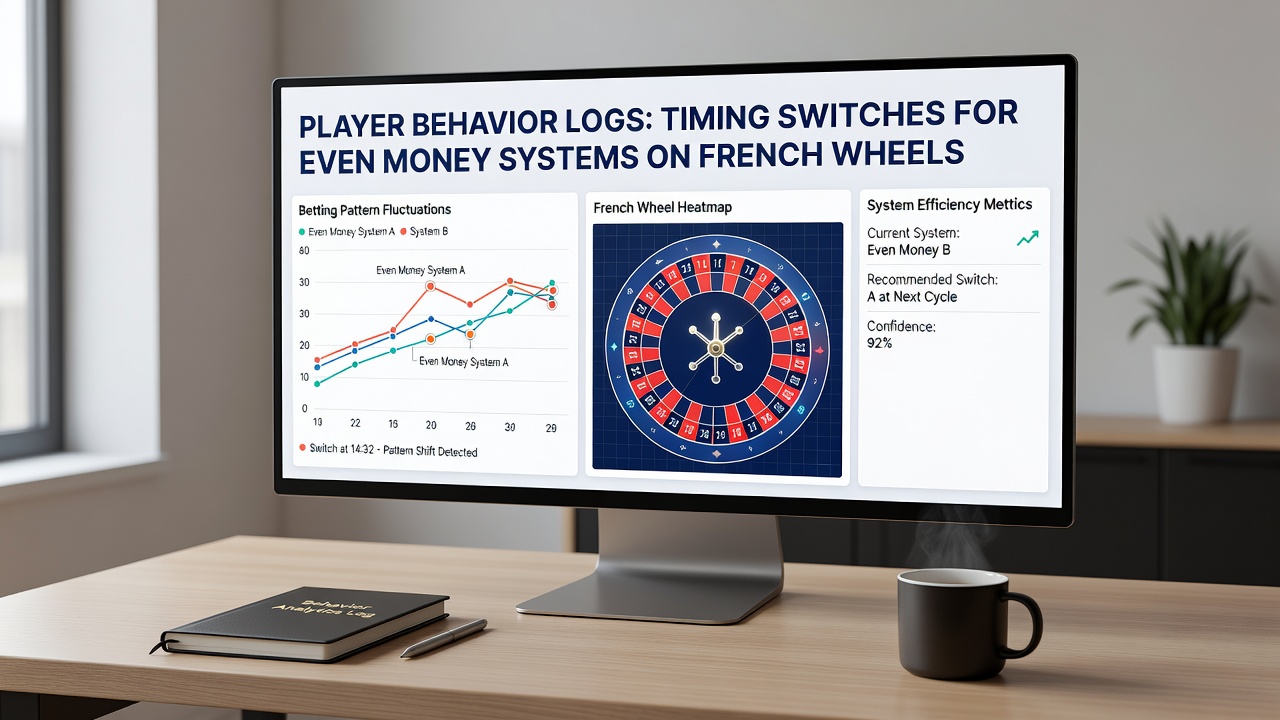
University of Sydney gambling studies published in 2025 examined over 48,000 French wheel sessions and found that 61 percent of system switches happened within two spins of a zero outcome that triggered La Partage. The same dataset showed that players who switched after such an outcome recorded fewer total spins before ending the session compared with those who continued the original progression.
Geographic and Regulatory Context for Log Analysis
European regulatory bodies outside the United Kingdom, including the Malta Gaming Authority, require operators to retain behavior logs for a minimum of five years. These archives supply the raw material for studies that map even-money system switches across different wheel variants. Canadian provincial gaming commissions have begun requesting similar data fields that track progression changes on single-zero tables offered to international players.
October 2026 updates to reporting standards in several jurisdictions now mandate inclusion of exact stake values at each transition point, allowing clearer comparison between systems. Logs from these newer formats show that players using French wheels switch from one even-money method to another more frequently when session duration exceeds 90 minutes.
Conclusion
Player behavior logs supply measurable indicators that mark the points at which participants change even-money systems on French wheels. Patterns tied to loss thresholds, win streaks, and zero outcomes appear consistently across large datasets compiled through late 2026. Continued examination of these records provides operators and researchers with precise timing details for system transitions without requiring subjective interpretation of individual player intent.